
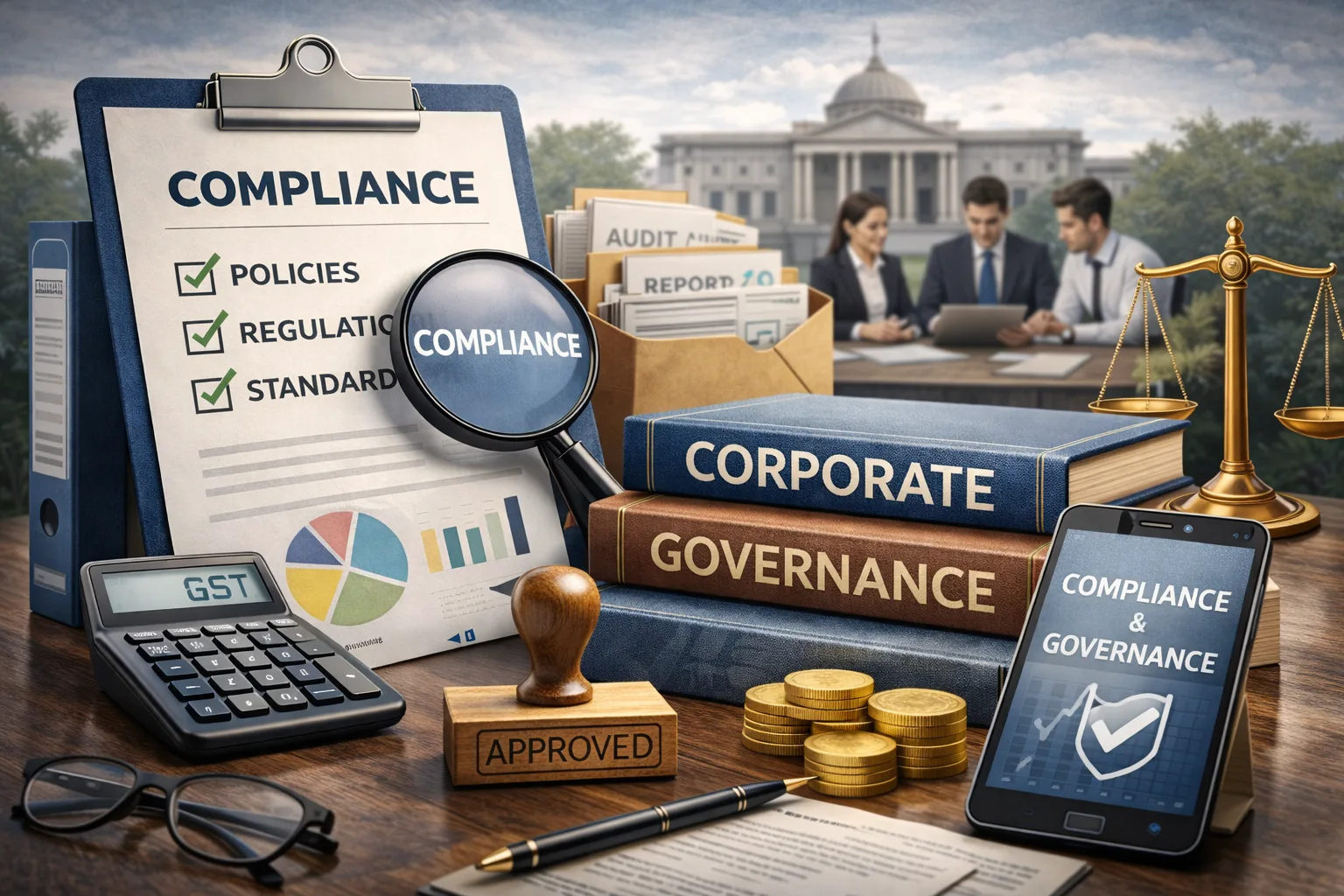
In today’s dynamic and highly regulated business environment, compliance and corporate governance have become essential pillars for organizational success. They are no longer viewed as mere legal obligations but as strategic tools that help businesses build trust, manage risks, and ensure long-term sustainability. Strong compliance practices combined with effective corporate governance create a framework that promotes transparency, accountability, and ethical conduct across the organization.
Understanding Compliance and Corporate Governance
Compliance refers to adhering to laws, regulations, standards, and internal policies applicable to a business. This includes statutory requirements, industry regulations, labor laws, tax laws, and environmental norms. Corporate governance, on the other hand, is the system by which companies are directed and controlled. It defines the roles and responsibilities of the board of directors, management, shareholders, and other stakeholders.
Together, compliance and corporate governance ensure that a company operates within the legal framework while maintaining ethical integrity and responsible decision-making.
Legal Protection and Risk Management
One of the primary reasons compliance is crucial is risk mitigation. Non-compliance can result in heavy penalties, legal action, reputational damage, and even business closure. Regulatory authorities across the world are increasingly strict, making it vital for organizations to stay updated with evolving laws and regulations.
Good corporate governance further strengthens risk management by establishing checks and balances within the organization. A well-governed company identifies potential risks early, ensures proper internal controls, and adopts corrective measures before issues escalate. This proactive approach protects the company from financial losses and operational disruptions.
Enhancing Transparency and Accountability
Transparency is the foundation of trust in any organization. Compliance ensures accurate reporting, proper disclosures, and adherence to financial and operational standards. Corporate governance promotes accountability by clearly defining authority, responsibility, and decision-making processes.
When roles and responsibilities are well-defined, management actions are monitored, and performance is regularly reviewed, it reduces the chances of fraud, mismanagement, and unethical practices. This transparency reassures stakeholders that the company is being run responsibly.
Building Investor and Stakeholder Confidence
Investors, lenders, and business partners increasingly evaluate a company’s governance and compliance culture before engaging with it. Strong corporate governance assures investors that their interests are protected, financial information is reliable, and the company is managed efficiently.
Compliance also plays a significant role in maintaining stakeholder confidence. Employees feel secure working for an organization that follows laws and ethical practices, customers trust companies that operate responsibly, and regulators are more cooperative with businesses that demonstrate compliance discipline. This collective confidence contributes to stable growth and stronger market positioning.
Promoting Ethical Business Practices
Corporate governance sets the ethical tone of an organization. Through codes of conduct, whistleblower policies, and ethical guidelines, companies can promote integrity at every level. Compliance ensures that these ethical standards are not just theoretical but actively practiced and enforced.
Ethical behavior not only prevents legal issues but also enhances brand reputation. In an era where information spreads rapidly, ethical lapses can severely damage a company’s image. A strong governance framework helps businesses maintain credibility and public trust.
Supporting Sustainable Growth
Sustainable growth is not just about increasing profits; it is about growing responsibly. Compliance ensures that expansion plans align with regulatory requirements, while corporate governance provides a structured approach to strategic decision-making.
Well-governed companies are better equipped to adapt to market changes, handle crises, and seize new opportunities. They can scale operations smoothly, enter new markets confidently, and manage complexity without compromising control or compliance.
Improving Operational Efficiency
Contrary to the belief that compliance creates bureaucracy, effective compliance systems can actually improve efficiency. Standardized processes, documented policies, and regular audits help streamline operations and eliminate inefficiencies.
Corporate governance enhances coordination between the board and management, ensuring that strategic goals are aligned with operational execution. Clear reporting structures and performance monitoring lead to better decision-making and resource utilization.
Long-Term Value Creation
Ultimately, compliance and corporate governance contribute to long-term value creation. Companies that prioritize governance tend to outperform those that do not, as they are more resilient, transparent, and adaptable. They are better positioned to handle regulatory changes, economic downturns, and competitive pressures.
Strong governance also facilitates succession planning, leadership continuity, and smooth transitions during mergers or acquisitions. This stability is essential for preserving and enhancing shareholder value over time.
Conclusion
Compliance and corporate governance are no longer peripheral obligations; they are integral to an organization’s credibility, resilience, and long-term success. Robust compliance frameworks safeguard businesses against regulatory, financial, and reputational risks, while strong governance promotes ethical conduct, transparency, and informed decision-making.
Avenir Business Advisors works closely with organizations to embed compliance and governance into their core business strategy rather than treating them as standalone regulatory requirements. By fostering a culture of accountability and excellence, businesses can move beyond reactive compliance and build sustainable, trust-driven growth. In an increasingly complex and closely regulated business environment, organizations that proactively embrace these principles are better positioned to adapt, perform, and thrive.